


(1)_edited.png)
3D Areola Restoration for Sarasota Clients

Restoring the Nipple and Areola So Both Sides Match
Areola restoration can mean a lot of different things. Sometimes a client is missing an areola completely. Sometimes one side healed lighter, smaller, or uneven after surgery. Sometimes there is scarring around the areola that pulls the eye every time she looks in the mirror. Whatever brought you here, the goal is the same: a nipple and areola that look like they belong to you.
I'm Bianca Cypser, and I do this work at Imagine You New in St. Petersburg. Clients drive up from Sarasota, Venice, Bradenton and Lakewood Ranch for it, and the drive is about an hour over the Skyway.
What I Mean by a Restoration Project
I call these restorations projects, because that is what they are. I'm taking everything that was changed and putting it back together, either the way it was or the way you envision it.
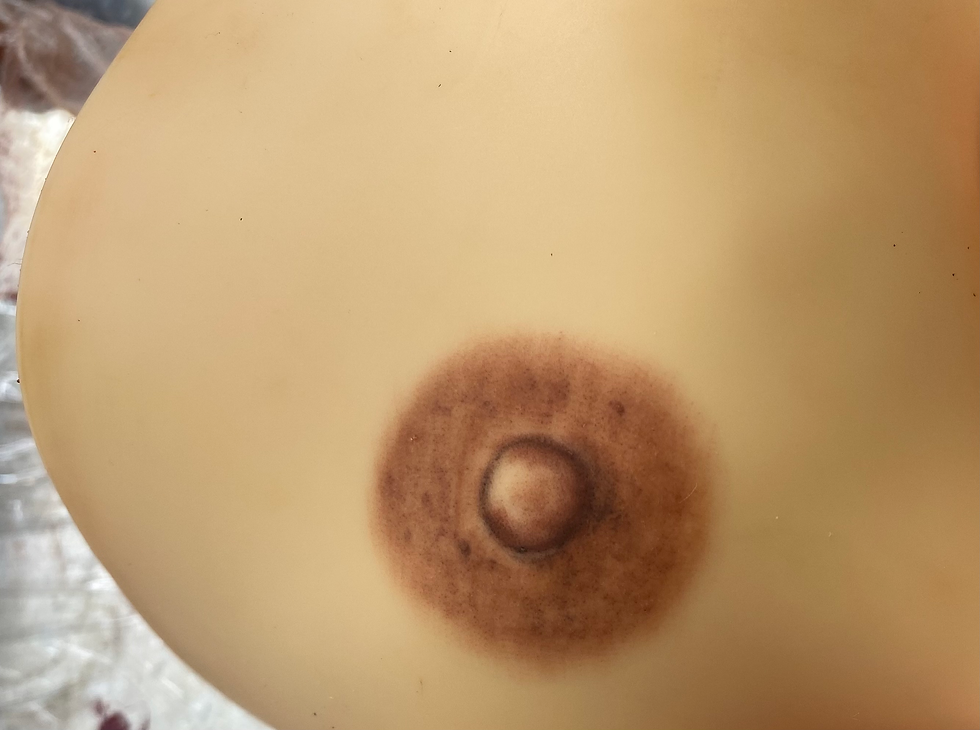
One of the things people find me for most is duplication. If one side is natural and the other was lost or damaged, I measure the natural side and recreate it on the other: the same size, the same shape, the same placement, and the same color. That includes the nipple, the areola, and the small raised bumps on the areola called Montgomery glands. Tattooing that texture is what makes a 3D areola read as real instead of flat.
Duplication is hard to get right, and it is one of my favorite kinds of restoration work. It takes sessions to get there, building color and detail in layers, but the result is two sides that look like a pair.
And if you want a different color, we can do that too, even on the natural side. Some clients want both areolas warmer, deeper, or more defined than they were before.
Scarring Around the Areola
Many breast surgeries leave a scar around the edge of the areola, and sometimes that scar heals white, shiny, or uneven. I blend the scar into the surrounding skin and clean up the border so the areola has a soft, natural edge again. Areola work and scar camouflage often happen together in the same project.
Why People Need Areola Restoration
After breast cancer. Many women who have a mastectomy lose the nipple and areola with the breast tissue. The areola is usually the last step of breast reconstruction, and for a lot of women it is the step that finally makes them feel finished. When only one breast was affected, matching the new areola to the natural one is exactly what duplication is for.
After a surgery that healed unevenly. Sometimes during a lift, reduction, or augmentation, an areola doesn't get enough blood flow and the tissue is lost, which is called necrosis. Other times the shape or color just heals differently from side to side. This happens even with excellent surgeons, and plastic surgeons send patients to me for exactly this reason.
After surgical nipple reconstruction. A nipple built surgically can flatten over time. A 3D tattoo adds highlights and shadows that create the look of projection on a flat surface.
Color loss. Areolas can lighten or lose definition over the years or after surgery. I can bring the color back.
Piercing damage. A nipple piercing that tore, stretched, or scarred can leave the shape distorted. I can tattoo the shape back and blend the damaged skin.
Shape and size differences. Some people were simply born with uneven areolas or have changed after pregnancy, weight loss, or injury, and want them to match.
What the Process Looks Like
We start with a consultation where I look at both sides, talk about what you want, and plan the color, size, and shape. On the first session I measure and map the areola, then build the base color. Following sessions add depth, highlights, texture, and the Montgomery glands, and refine the match. Most clients are back to normal activities right away, and healing takes a few days.
Over the years an areola tattoo can soften, and a quick touch-up brings back the original depth and color.
You can see many examples of my restoration work on my website, including duplication and scar blending around the areola.
Book Your Areola Restoration Consultation
Imagine You New
4137 5th Ave N, St. Petersburg, FL 33713
727-729-9069
imagineyounew.com
Serving clients from Sarasota, Venice, Bradenton, Lakewood Ranch, Tampa, Clearwater, and across the Gulf Coast.
Frequently Asked Questions
Do you see clients from Sarasota?
Yes. Many of my areola clients come from Sarasota, Venice, Bradenton, and Lakewood Ranch. My studio is in St. Petersburg, about an hour north over the Skyway.
Can you make one areola match the other?
Yes. Duplication is one of my specialties. I measure the natural side and recreate its size, shape, placement, color, and Montgomery gland texture on the other side.
Do I need to have had breast cancer to get areola restoration?
No. I work with clients after mastectomy, but also after lifts, reductions, and augmentations that healed unevenly, after tissue loss from poor blood flow, after piercing damage, and with natural differences from side to side.
Can you change the color of my natural areola?
Yes. If you want a warmer, deeper, or more defined color, I can adjust the natural side as well as the restored side.
Can you cover the scar around my areola?
Yes. I blend scarring around the areola into the surrounding skin so the edge looks soft and natural.
How many sessions does areola restoration take?
It takes more than one session. I build color and detail in layers, and the number of sessions depends on the project, especially for duplication.
What is a 3D areola tattoo?
It is an areola tattoo with shading, highlights, and texture that create the look of a raised nipple and Montgomery glands on flat skin.
What is the downtime?
Most clients return to normal activities right away. Healing takes a few days.

The detail about tattooing Montgomery glands to create texture is what makes this stand out, since flat color alone rarely reads as natural. I'm curious how you decide the right amount of texture for someone whose natural side has very subtle glands versus more pronounced ones, especially when matching across two sides. Does the healed result tend to soften that texture over time, and do you plan for that from the first session?
Useful reference: https://loottoforge.org/