


(1)_edited.png)
Breast Reduction Scars: What to Expect and How to Get Rid of Red and Purple Scar
- Bianca Cypser
- Jun 1
- 7 min read

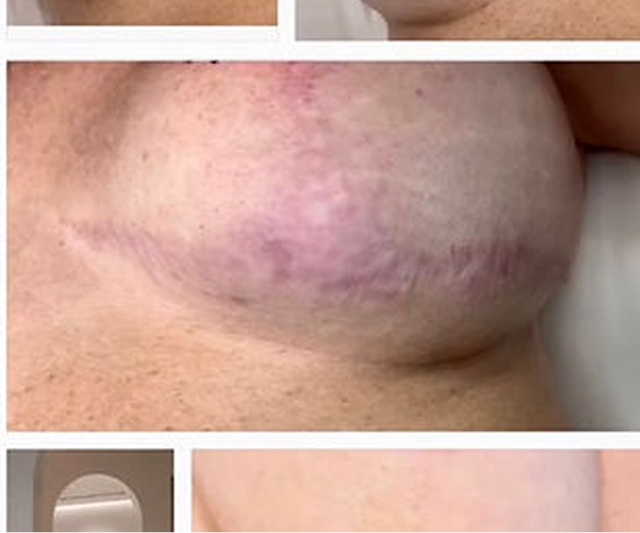
Breast reduction scars are the visible marks left behind as your body heals after breast reduction surgery. Most start out red, pink, or purple and slowly fade toward your natural skin tone over about a year. When a scar stays discolored or visible, scar camouflage tattooing at Imagine You New in St. Petersburg, Florida can blend it into your skin. Detailed scar work usually takes six to eight sessions.
What Are Breast Reduction Scars?
Breast reduction scars form because of your body's natural healing process. When your surgeon makes an incision and closes it, your body fills that incision with new scar tissue. That scar tissue is what knits the skin back together. Most breast reduction scars heal into thin lines, and the color can range from close to your natural skin tone to noticeably lighter or darker.
What Do Breast Reduction Scars Look and Feel Like?
Breast reduction scars vary in shape and size, but they usually look like a line that is a lighter or darker shade than the skin around it. A scar can also be pink, red, purple, gray, or dark brown. Some people are more likely to develop raised scars than others. In the early stages a scar may itch or feel tender as the skin heals.
Types of Breast Reduction Scars
The type of scar you end up with depends on the type of incision your surgeon makes. There are two main incision patterns used in breast reduction surgery.
In a vertical or lollipop procedure, the surgeon makes two incisions. One goes around the areola, the darker circle surrounding your nipple, and the other runs vertically from the bottom of the areola down to the crease underneath the breast.
In an inverted or anchor procedure, the surgeon makes three incisions. One goes around the edge of the areola, one runs from the bottom of the areola to the breast crease, and one follows along the breast crease itself. Your surgeon takes care to limit how noticeable the scars are, but no technique can prevent scarring entirely.
Complications: Keloid and Hypertrophic Scars
Two types of raised scars can develop after breast reduction surgery.
Keloid scars are raised scars that grow larger than the original incision. They build slowly over months or even years and do not fade on their own. Keloid scars are more common in people with darker skin tones because of genetics.
Hypertrophic scars are also raised, but they stay within the boundaries of the incision rather than spreading beyond it. They tend to appear within one to two months of surgery and usually fade with time.
How Do I Know What Type of Scars I Will Have?
The size and pattern of your breast reduction scars depend on the technique your surgeon chooses for you. That decision is based on your specific procedure, your breast size and anatomy, your breast shape and symmetry, and the result you are hoping to achieve. Your surgeon will recommend the approach that fits your body and your goals.
Do Breast Reduction Scars Change Over Time?
Yes. Breast reduction scars change as your body heals, and they go through fairly predictable stages.
After about six weeks, you may still have a bandage protecting the surgical site, so you may not see much of the scar yet. Once the dressings come off, the scar often has a red to purple tone and may sit slightly raised above the surrounding skin.
After about six months, the scar tissue is still new and tends to stand out. You no longer need a bandage because the skin has closed, but the scar may look lighter or darker than your natural tone. Red tones are usually still there, though less vivid than before, and the scar may be flat or slightly raised.
After about one year, the scar enters its remodeling stage and begins to blend closer to your natural skin tone. It can still be visible for months or longer, sitting a shade lighter or darker than the skin around it.
How Do I Reduce the Appearance of Breast Reduction Scars?
The single best thing you can do is follow your surgeon's post-surgical instructions closely. Beyond that, ask your provider which scar-softening options are right for you and when it is safe to start them. Common approaches include silicone creams, ointments, and silicone gel sheets, which can make a scar less noticeable. Cryotherapy uses cold to break down scar tissue. Corticosteroid injections can help shrink keloid scars. Laser skin resurfacing can soften the look of a scar by removing layers of skin. And gentle scar massage, once your surgeon clears you, can ease itching and support healing. Talk to your provider before using any cream, ointment, or oil, including vitamin E oil, since the evidence that vitamin E improves scars is limited.
How Do I Care for My Breast Reduction Scars?
Caring for your scars starts with caring for your incisions while they heal. Wear your surgical bra or bandages as directed, keep the area clean, and let your provider know right away if you notice pain, swelling, or other problems. As your scars heal, avoid scratching or scrubbing them, since that can disrupt healing and make scars more noticeable. Avoid smoking, which slows healing and worsens scarring. And protect the area from the sun by covering it or using sunscreen with SPF 30 or higher, because sun exposure darkens scars and raises your skin cancer risk.
Is There a Procedure to Remove Breast Reduction Scars?
If you are unhappy with your scars, talk to your provider about your options. Several procedures can reduce the appearance of a scar, but they are not right for everyone, and it is important to understand that breast reduction scars never disappear completely.
Are Breast Reduction Scars Permanent?
Breast reduction scars are permanent, but they soften over time. They can change in size and blend closer to your natural skin tone until you barely notice them. Surgeons place incisions where scars can be hidden, and even visible scars can usually be covered by clothing or a bikini.
When Should I Call My Provider?
Contact your provider if your breast reduction scars are bleeding, oozing, swollen, or red, if they go numb or lose sensation, if they open or split, or if they become painful, itchy, or unusually sensitive.
Other Types of Breast Surgery Scars
Breast reduction is not the only breast procedure that leaves scars. Each procedure has its own incision pattern. Breast augmentation scars are usually placed in the crease under the breast or around the lower half of the areola. Breast lift scars typically circle the areola with additional lines down to or out from the breast crease. A breast biopsy can leave a small round or linear scar on the affected area. Gynecomastia surgery may leave small liposuction scars around the base of the breast, or a larger incision if the nipple and areola are repositioned.
How Scar Camouflage Gets Rid of Red and Purple Scars
Once a scar is fully healed but still red, purple, or visible, scar camouflage tattooing offers a way to make it blend in. Scar camouflage is a paramedical tattooing technique that deposits custom-blended, skin-tone pigment directly into the mature scar. Instead of a red or purple line standing out against your skin, the pigment neutralizes the discoloration and rebuilds the look of even, natural skin tone across the scar. Done well, the eye stops landing on it. People see skin, not a scar.
Why Imagine You New Is So Good at This
This is detailed, artistic work, and it is what we do. At Imagine You New in St. Petersburg, Florida, we have this technique down. Using advanced color theory and undertone-focused pigment blending, we match pigment to your exact complexion so the camouflaged scar disappears into the skin around it rather than looking painted over. Bianca Cypser is a licensed esthetician with over twenty years of experience and hundreds of documented paramedical tattoo cases, and she blends color for every skin tone. What we work toward is simple. We make scars look like skin.
How Many Sessions It Takes
Scar camouflage is not a one-and-done appointment. Good, detailed scar work usually takes six to eight sessions, spaced out over time so the skin can heal and accept color between each round. Each session builds on the last, layering and refining pigment until the scar blends seamlessly. Detailed work takes patience, and that patience is what produces a result that holds up and truly looks like skin.
What Healing Is Like After Each Session
Healing after a scar camouflage session is straightforward. The treated area typically heals in about a week. During that time you keep the scar lightly moisturized with Aquaphor and protected while the skin recovers. Once it has healed, you return for your next session and we keep building toward the final result. Following the aftercare between sessions is a big part of getting clean, even color.
Serving St. Petersburg and Tampa Bay
We work with clients throughout St. Petersburg and welcome clients who travel from Tampa, Clearwater, and Sarasota for breast reduction scar camouflage, breast lift scar camouflage, and 3D areola restoration.
Frequently Asked Questions
How do you get rid of red or purple breast reduction scars?
Once the scar is fully healed, scar camouflage tattooing deposits custom skin-tone pigment into the scar to neutralize the red or purple color and blend it into your natural skin tone, so the scar looks like skin.
Can scar camouflage make breast reduction scars look like skin?
Yes. With careful color matching across all skin tones, scar camouflage blends a mature scar into the surrounding skin so it no longer stands out. At Imagine You New in St. Petersburg, Florida, this is a specialty.
How many sessions does breast reduction scar camouflage take?
Good, detailed scar camouflage work usually takes six to eight sessions, spaced out so the skin heals and accepts color between each round.
What is healing like after scar camouflage tattooing?
Each session typically heals in about a week. You keep the area lightly moisturized with Aquaphor and protected while it recovers, then return for your next session.
How long after breast reduction surgery can I get scar camouflage?
The scar needs to be fully healed and stable first, usually around twelve to eighteen months after surgery once the redness has settled. A consultation confirms whether your scar is ready.
Ready to Learn More
If your breast reduction scars are still red or purple and you want them to blend into your skin, scar camouflage may be the answer once your scars are mature. Call Imagine You New at 727-729-9069 or book a consultation online to find out if you are ready to begin.


The content on windows 11 deals is informative and well organized.
Very informative article on breast reduction scars. It's great to know that there are options like scar camouflage tattooing to help with the healing process. For more information on skin care treatments and tattooing, check out FunBoxie.